

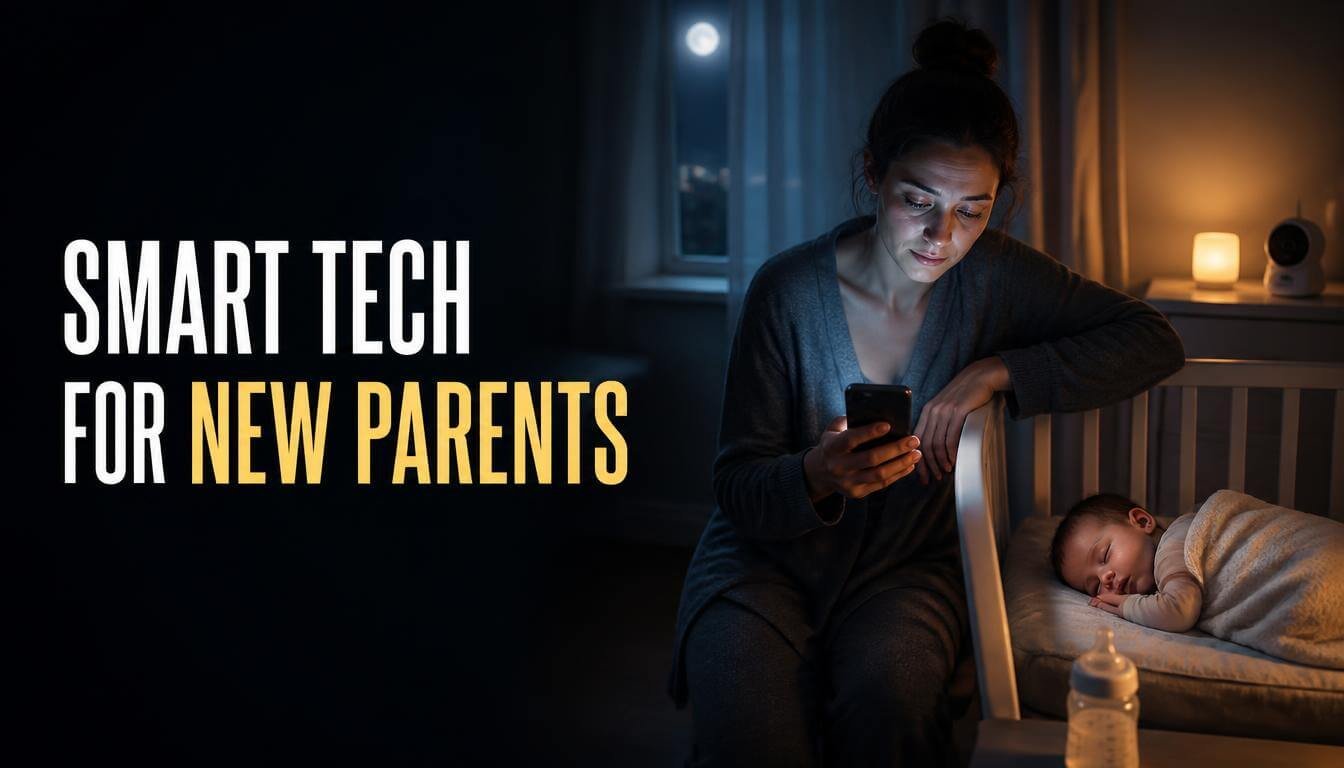
Finding reliable beginner friendly daily tech explainers for new parents feels impossible when holding a crying newborn at two in the morning. Your exhausted brain cannot process dense manuals, complex wireless settings, or bloated subscription apps. You only want straightforward gadgets that actually work when fatigue peaks. Practical knowledge brings immediate calm, helping you choose sanity over endless tech frustration every single day.
Smart Video Monitors: Dedicated Radio Units vs Wi-Fi Cameras
Dedicated local radio monitors transmit video directly to a parent handheld screen without touching your home internet router. Units like the Infant Optics DXR-8 PRO use secure local frequency transmission, whereas Wi-Fi cameras stream high-definition video feeds directly to your smartphone.
Wi-Fi models offer background audio and sleep analytics, making them great for working parents who want to check in from the office. However, if your home internet drops during a storm, your nursery feed goes completely dark. Local radio monitors never suffer from server outages or buffering delays, but their physical range stops at your backyard fence.

Beginner Friendly Daily Tech Explainers for New Parents: Responsive Smart Bassinets
Responsive cribs use built-in acoustic sensors and motorized swivels to rock restless babies back to sleep automatically. Devices like the SNOO Smart Sleeper react to crying by gradually ramping up white noise volume and soothing motions.
They work best for exhausted solo parents who need an extra virtual set of hands during rough newborn sleep regressions. The major catch is the eye-watering price tag, alongside the sudden shock babies experience when transitioning out of the robotic soothing response into a standard motionless crib at six months. Renting one monthly makes far more financial sense than buying it outright.
Programmable White Noise Machines and Sound Hubs
Constant sound masking mimics the loud rushing blood of the womb while blocking sudden household clatter. The Hatch Rest combines a sound generator, night light, and a toddler time-to-rise clock into one app-controlled hub.
It works brilliantly for parents establishing rigid bedtime cues through customizable color and sound combinations. My biggest frustration involves the companion mobile app, which constantly pushes an unnecessary paid membership subscription just to access extra lullabies. You can easily skip the paywall, because standard continuous sound masking like pink noise and rainfall sounds do all the heavy lifting anyway.
Wearable Biometric Trackers and Smart Socks
Wearable baby sensors wrap around a tiny foot to measure heart rate, oxygen levels, and movement patterns while your infant sleeps. The Owlet Dream Sock sends real-time readings to a bedside charging base and your smartphone via low-energy Bluetooth.
Anxious first-time parents who find themselves constantly checking crib breathing will appreciate the reassurance. Still, loose placement triggers annoying false alarms at two in the morning, spiking your adrenaline for zero reason. If you use these beginner friendly daily tech explainers for new parents to weigh your options, remember that pulse oximetry monitoring never replaces safe sleep environments.
Automated Formula Dispensers vs Temperature-Controlled Kettles
Push-button formula machines mix warm water and powdered formula into an airtight bottle in under ten seconds flat. The Baby Brezza Formula Pro Advanced acts like an espresso maker for infants, eliminating manual measuring and clump shaking.
It is a lifesaver for twins or exclusively formula-fed infants who demand instant feedings. Unfortunately, the mixing funnel builds up crusty residue every four bottles, demanding constant hand washing and meticulous drying to preserve powder dispensing accuracy. A simple variable-temperature electric kettle costs a fraction of the price, requires almost zero upkeep, and keeps boiled water at body temperature all night long.

Digital Feeding Trackers and Sleep Prediction Apps
Mobile tracking apps replace paper charts to log nursing sessions, wet diapers, bottle volumes, and nap durations. Apps like Huckleberry use predictive algorithms to calculate the exact sweet spot when your infant will become tired.
They work wonderfully for sleep-deprived partners who need to hand off care duties without playing twenty questions about the last feeding time. The drawback is data fatigue, where you spend more energy staring at phone screens than interacting with your child. Using beginner friendly daily tech explainers for new parents helps you realize that wake window calculation is an optional support system, not a strict medical mandate.
Non-Contact Infrared and Connected Smart Thermometers
Infrared forehead scanners take accurate body temperature readings in one second without waking a sleeping, feverish child. Smart thermometers from brands like Kinsa connect via Bluetooth to log fever timelines and provide age-specific medicine dosage reminders.
They are ideal for frantic parents who forget what time they gave infant acetaminophen during a stressful midnight fever spike. Keep in mind that external factors like a sweaty forehead or cold room drafts can throw off infrared temporal scanning by a full degree. When precision matters most during early newborn illness, traditional rectal digital thermometers remain the medical gold standard.
Smart Ultrasonic Humidifiers and Nursery Air Monitors
Dry indoor air aggravates baby congestion, while smart ultrasonic humidifiers automatically regulate nursery moisture levels to maintain ideal breathing conditions. Connected units like the Levoit Smart Humidifier pair with remote room sensors to pump cool mist until moisture levels reach optimal comfort.
This setup prevents the swampy condensation that breeds mold on bedroom windows while keeping baby nasal passages clear through automatic target humidity regulation. The annoying trade-off is the weekly cleaning routine, since ultrasonic plates build up white mineral dust and pink slime if you skip distilled water. An evaporative unit avoids mineral dust altogether, even if it looks less sleek on your nursery dresser.
Wi-Fi Photo Frames for Private Family Sharing
Cloud-linked digital frames let distant grandparents view fresh baby photos daily without relying on public social media feeds. Frames like the Aura Carver allow multiple family members to upload photos and short video clips directly from their phones via a private app.
It is the best gadget for keeping relatives updated while protecting your child’s digital footprint through private cloud photo syndication. The only real downside is managing storage permissions and reminding well-meaning relatives not to spam the frame with accidental duplicate photos. You get all the joy of sharing milestones without exposing personal family memories to ad trackers.
Frequently Asked Questions
How do beginner friendly daily tech explainers for new parents help prevent overspending?
They cut through aggressive retail marketing by separating genuine convenience from gimmicks. High-tech nursery gear often duplicates basic household tools at triple the price. Reading straightforward breakdowns helps you identify which items solve real daily pain points and which products will only gather dust in your nursery closet.
Do smart baby monitors pose any home Wi-Fi security risks?
Any camera connected to your internet router carries potential vulnerability if you use default passwords or outdated firmware. Enable two-factor authentication, update the manufacturer app regularly, and create a separate guest Wi-Fi network for smart devices. Dedicated non-Wi-Fi radio monitors eliminate internet security worries completely by using closed wireless frequencies.
Is a smart bassinet actually worth the high investment?
Smart bassinets provide tremendous relief for parents dealing with difficult infant sleep or recovering from complicated births. However, babies outgrow them by six months, making the upfront price difficult to justify. Renting a unit month-to-month gives you the soothing benefits without forcing you to pay thousands for short-term gear.
When should parents stop tracking baby metrics in apps?
Once your baby establishes steady weight gain and predictable feeding patterns around three to four months, you can safely reduce app logging. Transitioning from rigid digital tracking to reading natural hunger and sleep cues lowers parental anxiety and frees up valuable mental bandwidth during busy daily routines.
Can smart white noise machines cause hearing damage?
White noise machines are safe when placed at least seven feet away from the crib and kept under fifty decibels. Running a machine at maximum volume directly next to infant ears can damage delicate hearing. Test sound levels using a free smartphone decibel meter app placed inside the crib mattress.
Conclusion
Navigating early parenthood is tough enough without wrestling complicated gadgets that fail when you need them most. Choose one or two tools that solve your biggest daily struggles and ignore the rest of the high-tech pressure. Which nursery gadget has saved your sanity the most so far?